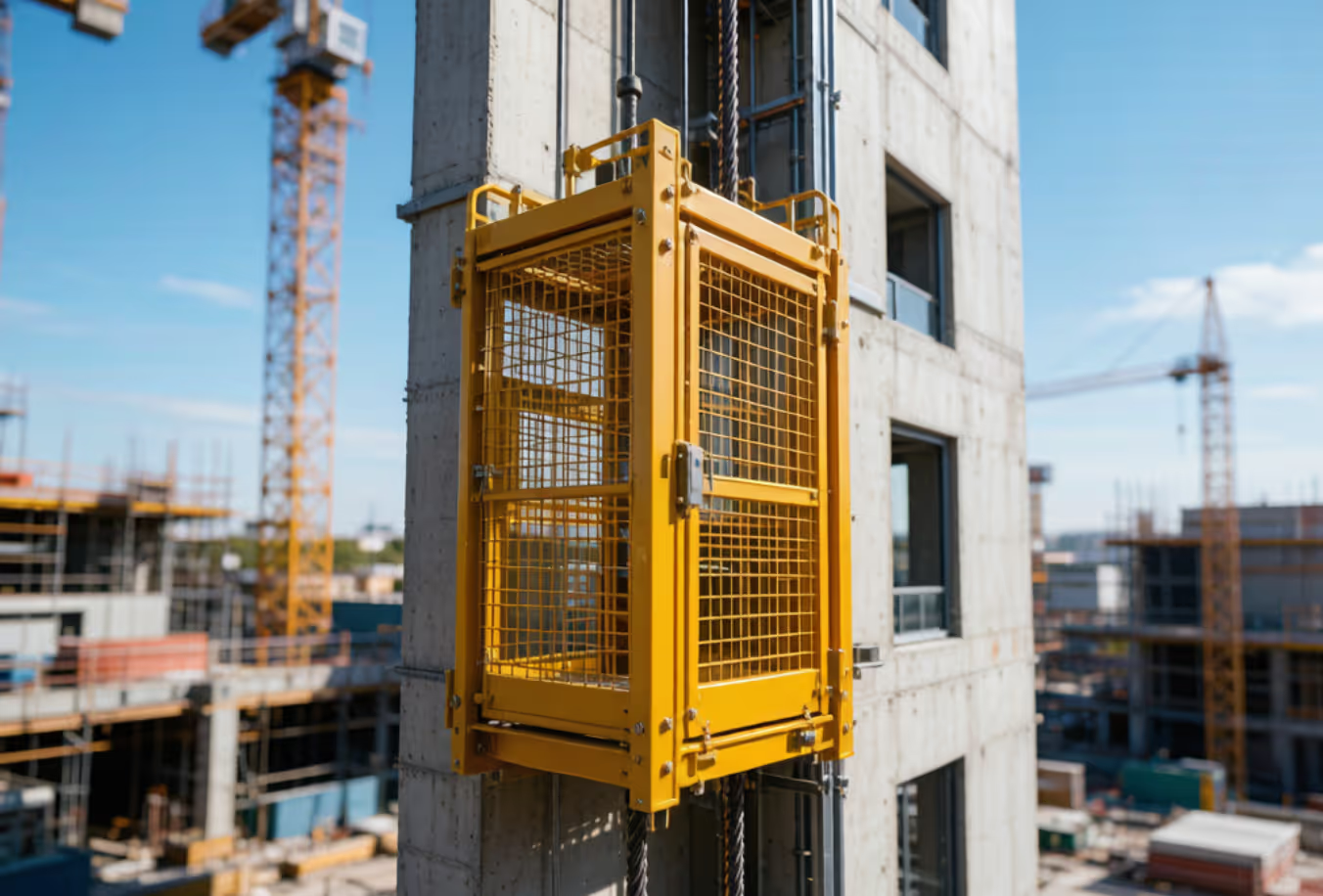
If you’ve ever watched a skyscraper go up, you’ve definitely seen it — that tall cage-like elevator clinging to the side of the building, shuttling workers and materials floor by floor. It’s called a construction hoist, and it’s basically the backbone of daily life on any mid-to-high-rise site.
What Is It?
A construction hoist is a temporary elevator system installed on the outside (or sometimes inside) of a building under construction. It consists of a tall mast made of interlocking steel sections, a motor-driven cage (or two), and a robust safety system. Unlike a passenger elevator in a finished building, this one is built as the structure rises and taken down when the job is done.
How It Works
The hoist climbs a rack-and-pinion system — imagine a gear on the cage meshing with a toothed rail fixed to the mast. An electric motor drives the pinion, pulling the cage straight up or letting it down smoothly. Most hoists have two cages running independently side by side, so one can go up while the other comes down — a huge time-saver on busy sites.
Why It Matters
- Moves people fast — workers can reach the 40th floor in under a minute instead of climbing stairs.
- Hauls heavy materials — bricks, concrete, tools, even small machinery, all delivered exactly where needed.
- Built-in safety — modern hoists have multiple brakes, overload sensors, and a mechanical safety device (called a parachute) that grips the mast if the cage ever falls too fast.
- Weather-resistant — enclosed cages keep crews dry and productive even in rain or wind.
The Bottom Line
Without construction hoists, high-rise building would grind to a halt. They’re not glamorous, but every beam placed and every worker on those upper floors depends on them. Next time you see that metal cage crawling up a half-finished tower, you’re looking at the hardest-working commuter system in the city — just temporary, and a lot taller than your average subway ride.